A receipt-aware budget controller that keeps uncertain spending visible.
Python 3.10+; functions, dictionaries, exceptions, integer arithmetic and callback functions. The core uses standard libraries. The grader checks your selected workspace; it never fills in missing behavior from the reference.
Build and run your version
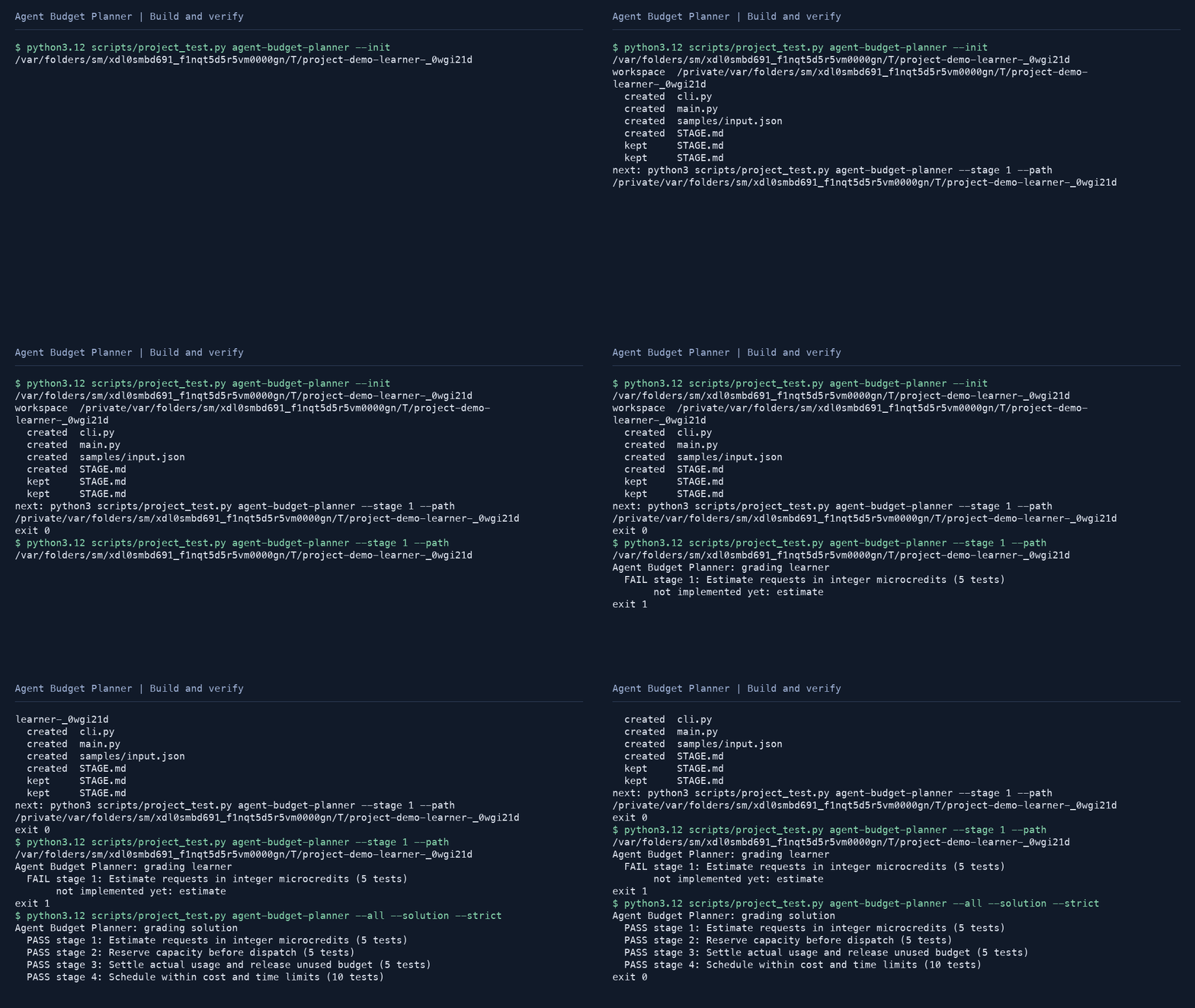
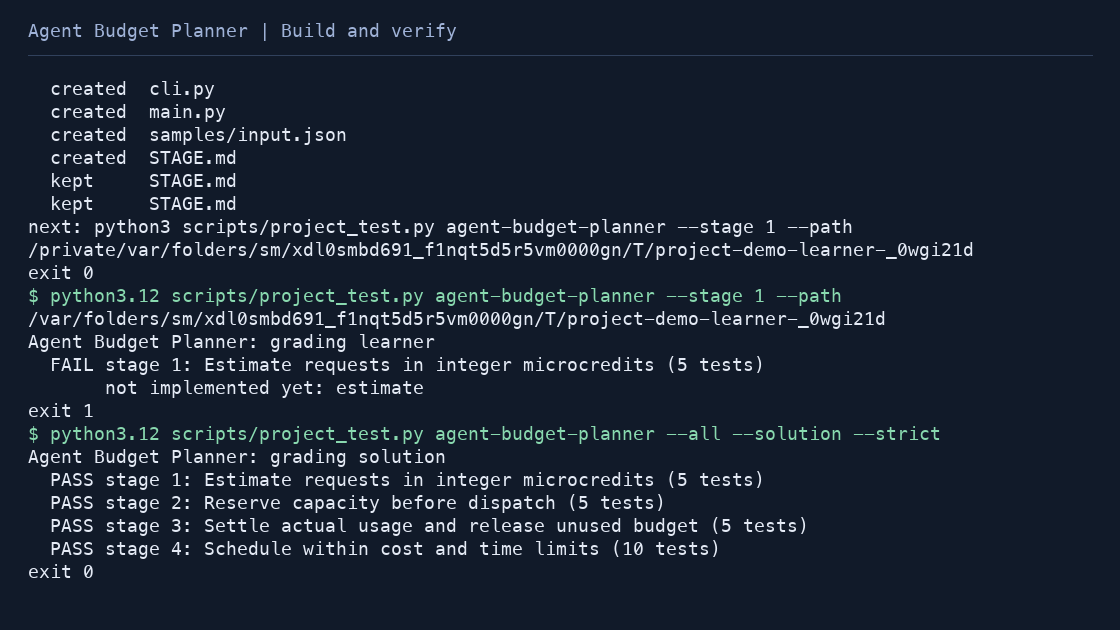
From the repository root, initialize once. A fresh starter fails intentionally.
python3 scripts/project_test.py agent-budget-planner --init learning-artifacts/agent-budget-planner
python3 scripts/project_test.py agent-budget-planner --stage 1 --path learning-artifacts/agent-budget-planner --strict
Implement each stage, then run the cumulative grader and the supplied input driver:
python3 scripts/project_test.py agent-budget-planner --all --path learning-artifacts/agent-budget-planner --strict
cd learning-artifacts/agent-budget-planner
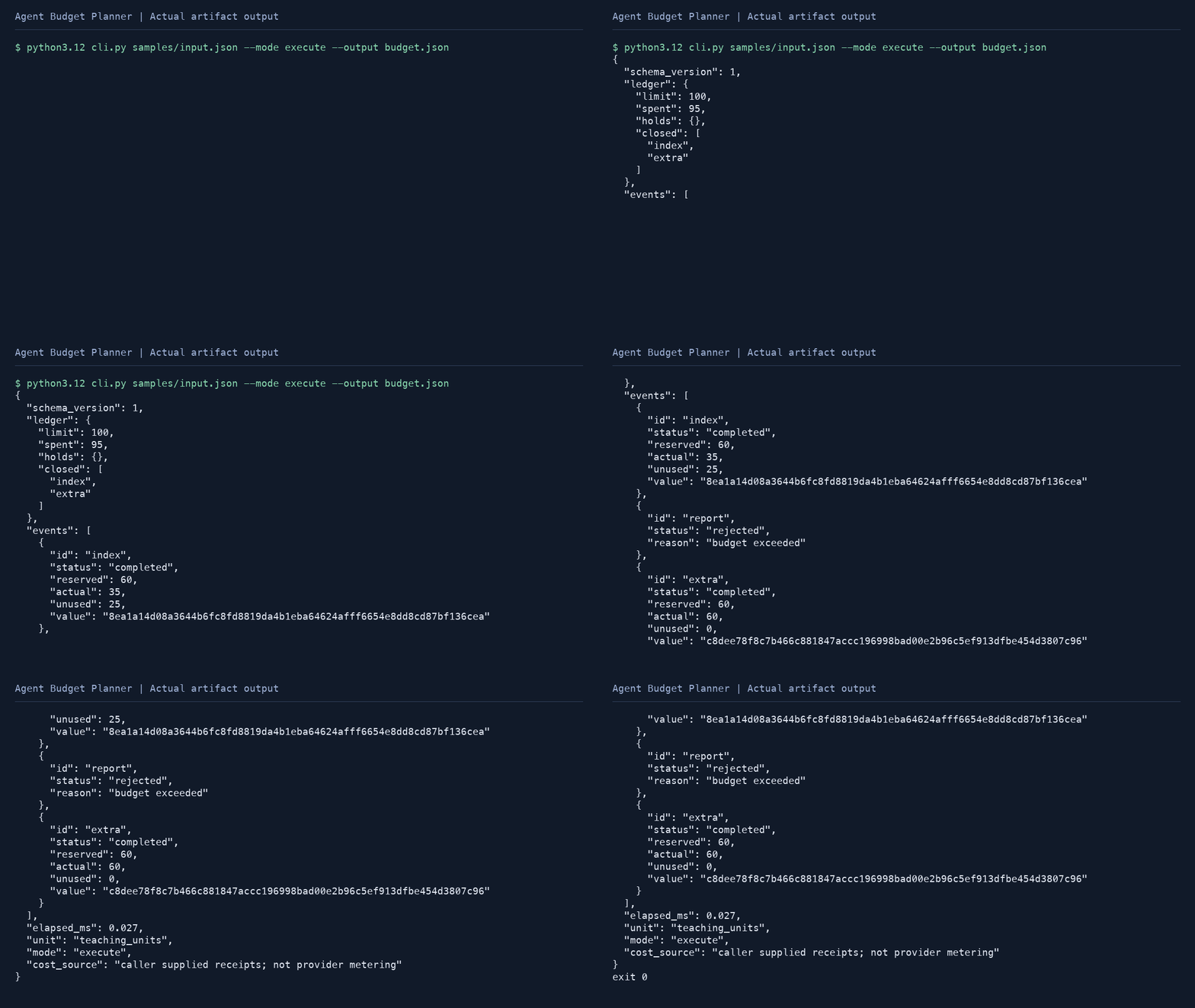
python3 cli.py samples/input.json --mode execute --output budget.json
The driver and offline samples are provided scaffolding. Its imports resolve to your implementation. Public input types and function signatures live in the starter and API contract.
Inspect the reference separately
From the repository root:
python3 scripts/project_test.py agent-budget-planner --all --solution --strict
cd projects/agent-budget-planner/solution
python3 cli.py samples/input.json --mode execute --output budget.json
Observe the change
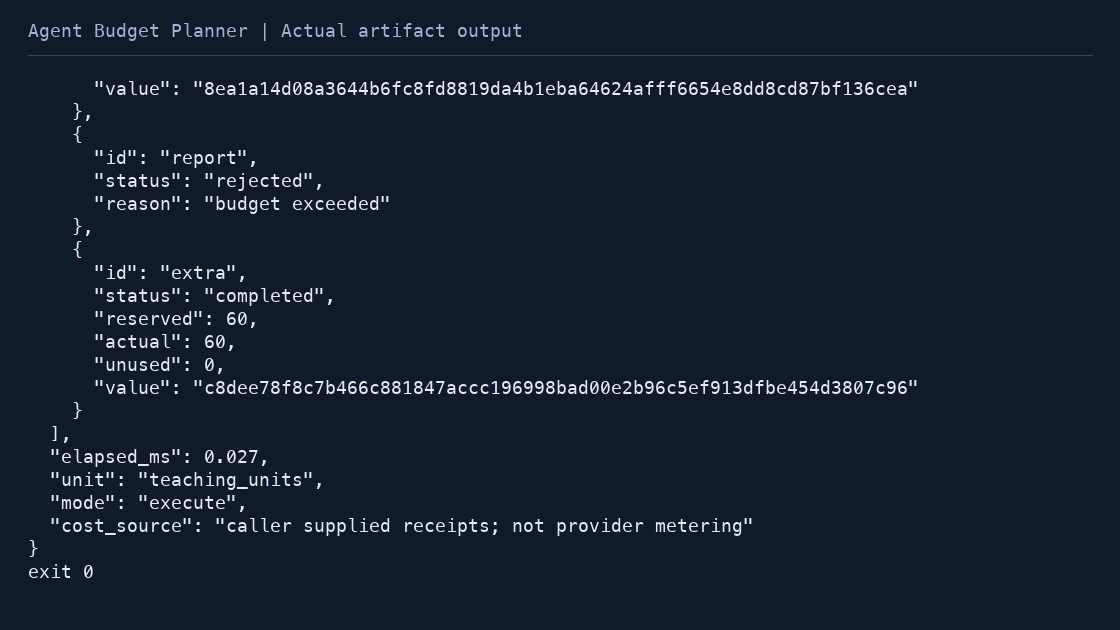
The recording requests 190 units against a 100-unit limit. Executing the supplied hash jobs admits two jobs, rejects one and settles 95 units; missing receipts keep their holds.
Edit a copy of the sample and rerun the command. Keep the input beside the output so someone else can reproduce the result; the supplied samples are authored teaching data.
Integration and limits
Import execute_jobs and provide invoke(job) -> (value, actual_cost). Use unit=nano_dollars only when rates and receipts have actually been converted to that unit.
Costs are caller-supplied integer receipts. A monotonic deadline gates dispatch but cannot interrupt a synchronous callback. The ledger is single-process and in-memory.
Stages
- Estimate requests in integer microcredits
- Reserve capacity before dispatch
- Settle actual usage and release unused budget
- Schedule within cost and time limits