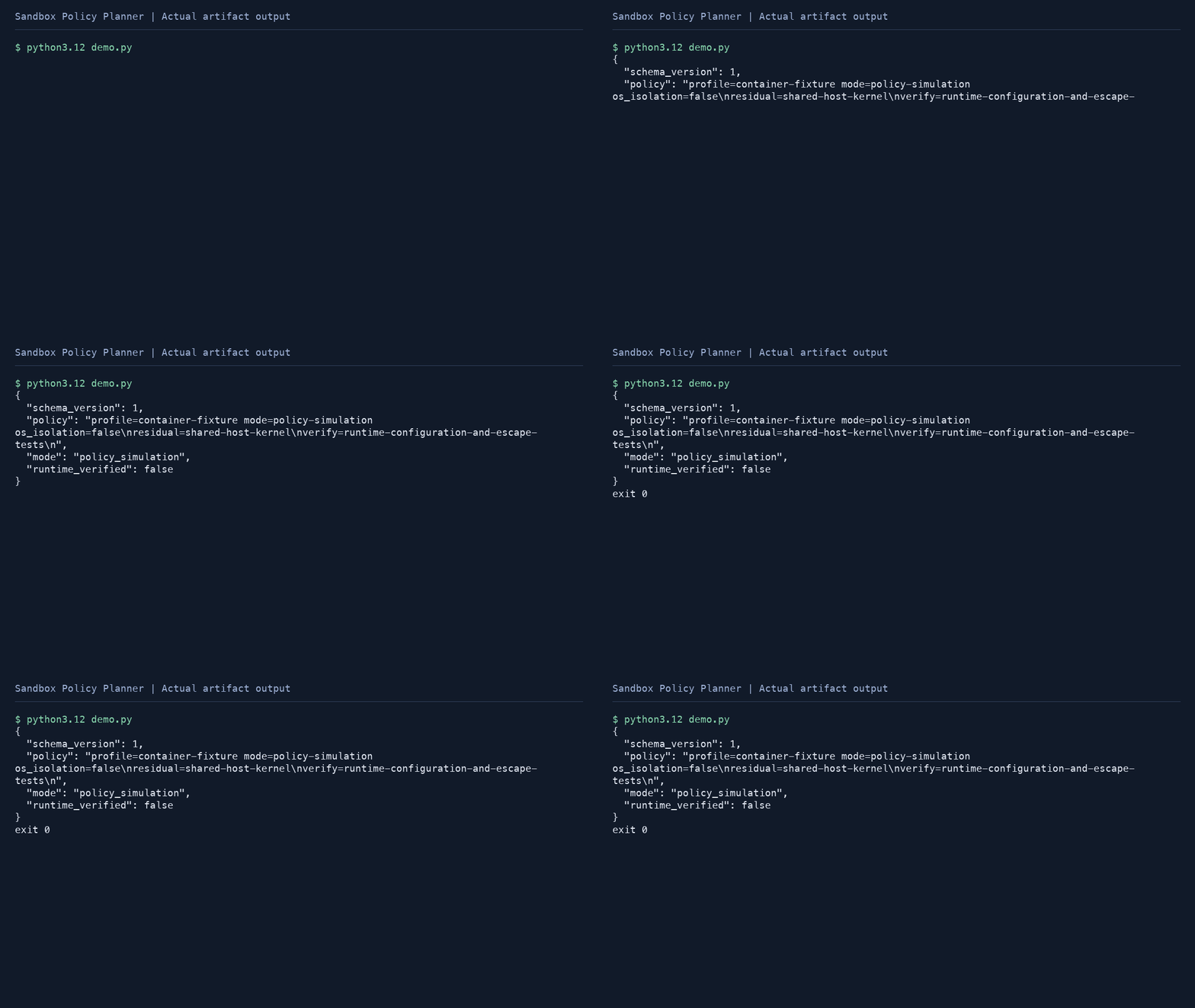
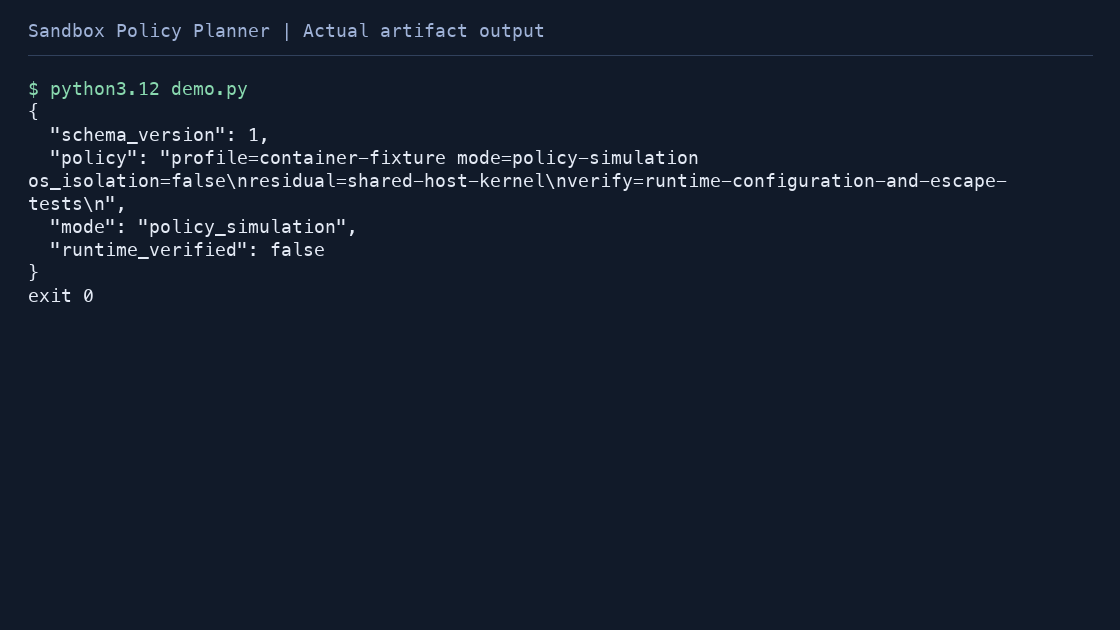
A sandbox evidence planner mapping requested capabilities to observed runtime probes.
Write the threat requirement as booleans before selecting a runtime. Here network=true means network denial is required, and host_kernel=true means a separate kernel is required. Neither name grants access.
Start with a learner workspace
Docker for AI, Security and secrets audit. Language foundation: Rust ownership and Result.
Install Rust (rustc) and Python 3.10+. The core uses the Rust standard library; Python adapters compile into private temporary directories.
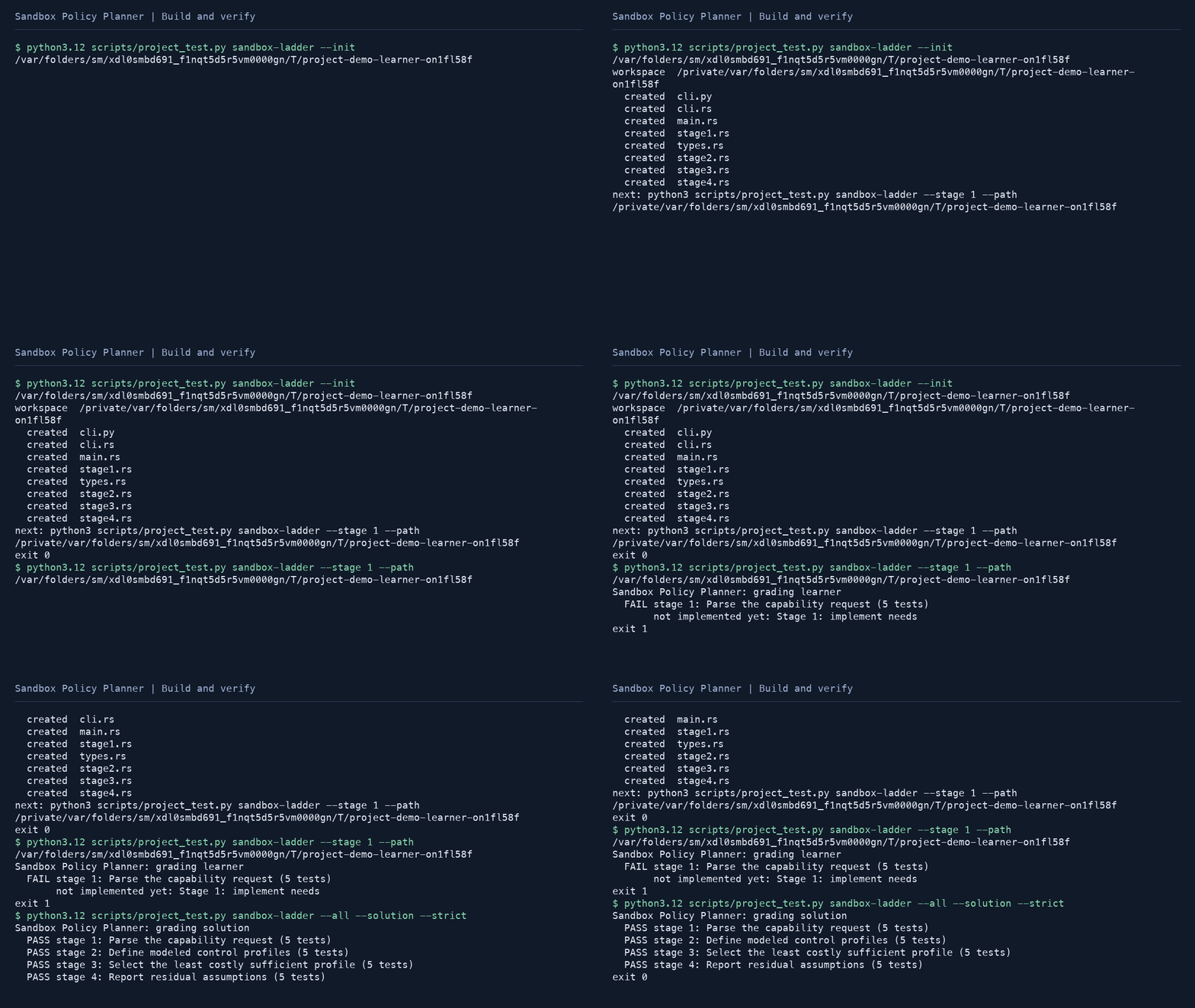
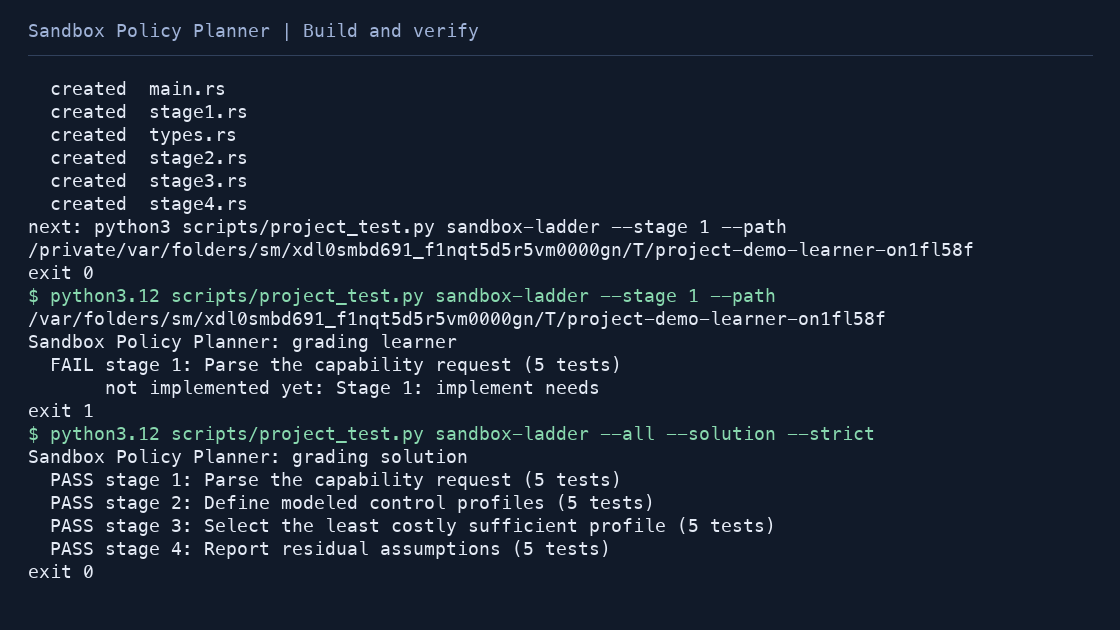
python3 scripts/project_test.py sandbox-ladder --init learning-artifacts/sandbox-ladder
python3 scripts/project_test.py sandbox-ladder --stage 1 --path learning-artifacts/sandbox-ladder
Build route
- Parse the capability request
- Define modeled control profiles
- Select the least costly sufficient profile
- Report residual assumptions
Run with your own inputs
After completing the stages, these commands run your workspace code on the original Orchard examples. Replace the sample paths with your own files.
python3 learning-artifacts/sandbox-ladder/cli.py untrusted=true,secrets=true,network=true,host_kernel=false --budget 3To inspect the complete reference first, replace learning-artifacts/sandbox-ladder with projects/sandbox-ladder/solution in the same command. JSON results use schema_version: 1; paths and argument examples are explicit so another tool can consume them.
Integration boundary
Default output is a policy simulation. --docker-image previews an invocation; --execute requires an already available local image and Docker. Only root-write and default-route probes are tested. The adapter never implements or verifies a microVM boundary.
python3 scripts/project_test.py sandbox-ladder --all --solution --strict
python3 scripts/project_test.py sandbox-ladder --all --path learning-artifacts/sandbox-ladder --strict
The first command checks the reference. The second checks your implementation. The published examples and tests are regression evidence, not a production certification or an unseen benchmark.