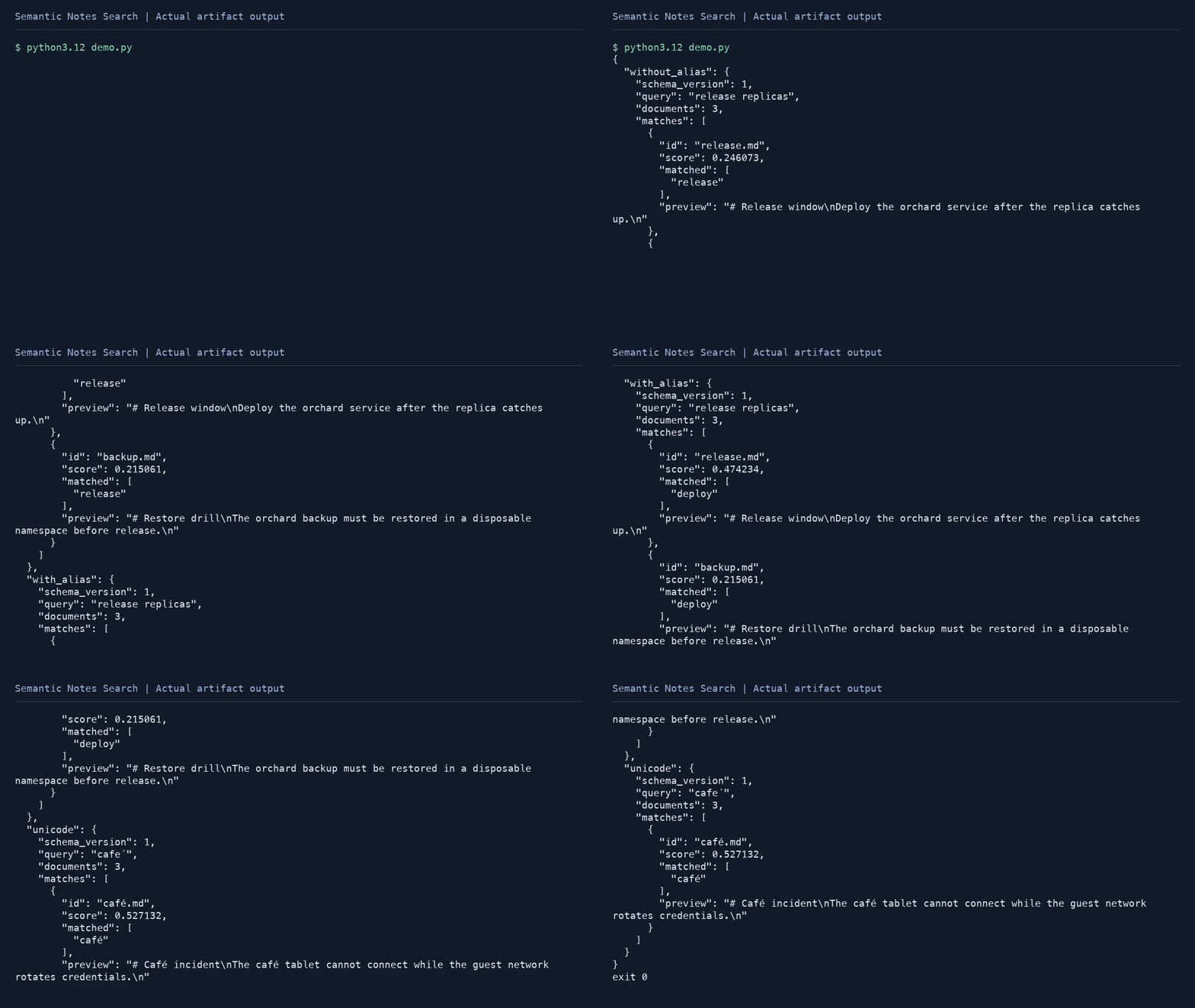
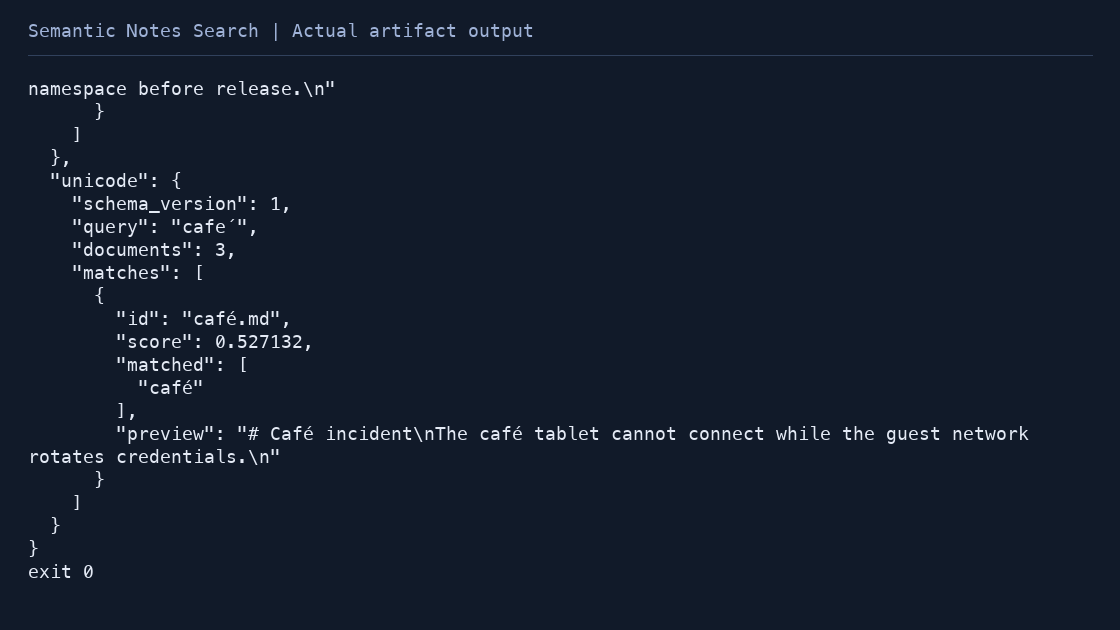
Local notes search explaining each match and showing when aliases help or harm.
Orchard operators type café with different Unicode encodings. Apply case folding and NFC normalization to both text and alias keys so equivalent spellings share tokens. An alias is one explicit lexical substitution.
Start with a learner workspace
Data management, Retrieval augmented generation. Language foundation: Python data structures.
Use Python 3.10+ and its standard library. POSIX is required where the project uses file locks or process-group supervision.
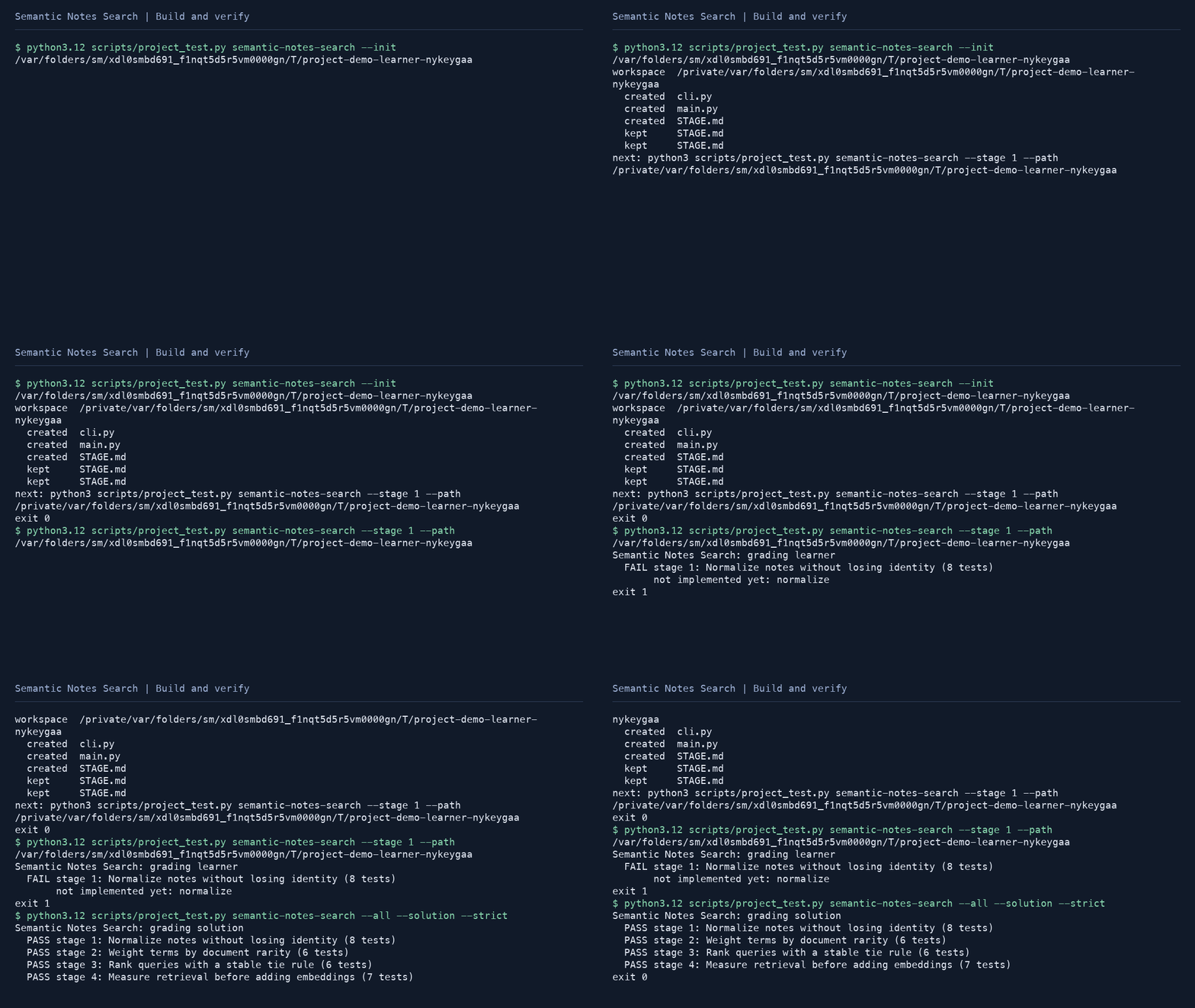
python3 scripts/project_test.py semantic-notes-search --init learning-artifacts/semantic-notes-search
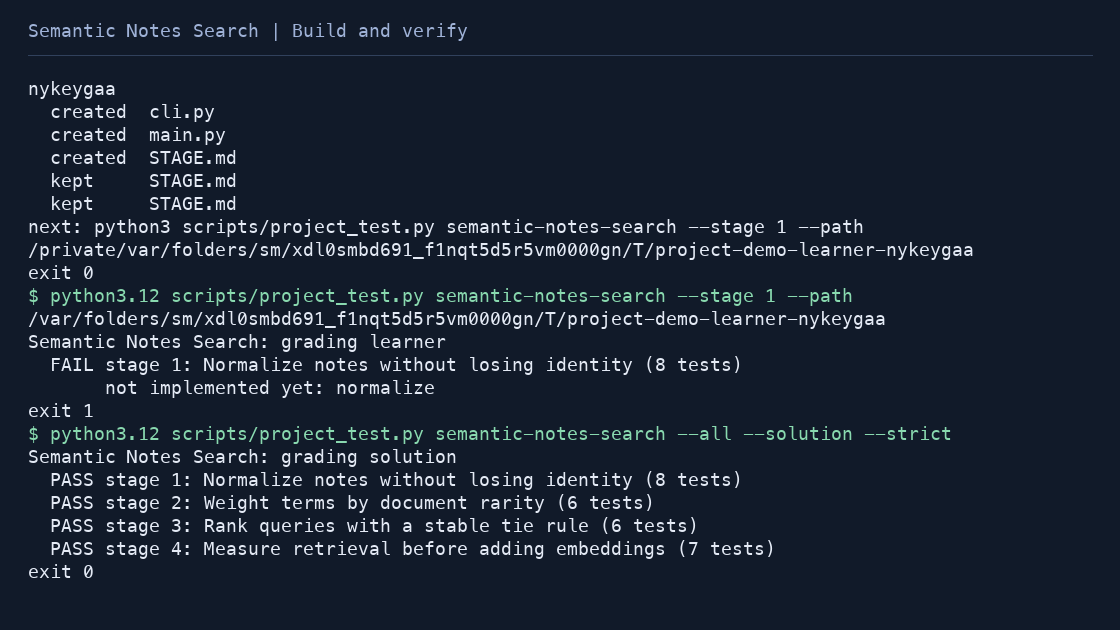
python3 scripts/project_test.py semantic-notes-search --stage 1 --path learning-artifacts/semantic-notes-search
Build route
- Normalize notes without losing identity
- Weight terms by document rarity
- Rank queries with a stable tie rule
- Measure retrieval before adding embeddings
Run with your own inputs
After completing the stages, these commands run your workspace code on the original Orchard examples. Replace the sample paths with your own files.
python3 learning-artifacts/semantic-notes-search/cli.py projects/semantic-notes-search/examples/notes "release replicas" --aliases projects/semantic-notes-search/examples/aliases.json --out matches.jsonTo inspect the complete reference first, replace learning-artifacts/semantic-notes-search with projects/semantic-notes-search/solution in the same command. JSON results use schema_version: 1; paths and argument examples are explicit so another tool can consume them.
Integration boundary
This is an explainable lexical TF-IDF baseline with explicit aliases, not a learned embedding model. The title preserves the project route; every match exposes its lexical terms. The folder reader accepts bounded UTF-8 markdown and rejects symlink files.
python3 scripts/project_test.py semantic-notes-search --all --solution --strict
python3 scripts/project_test.py semantic-notes-search --all --path learning-artifacts/semantic-notes-search --strict
The first command checks the reference. The second checks your implementation. The published examples and tests are regression evidence, not a production certification or an unseen benchmark.