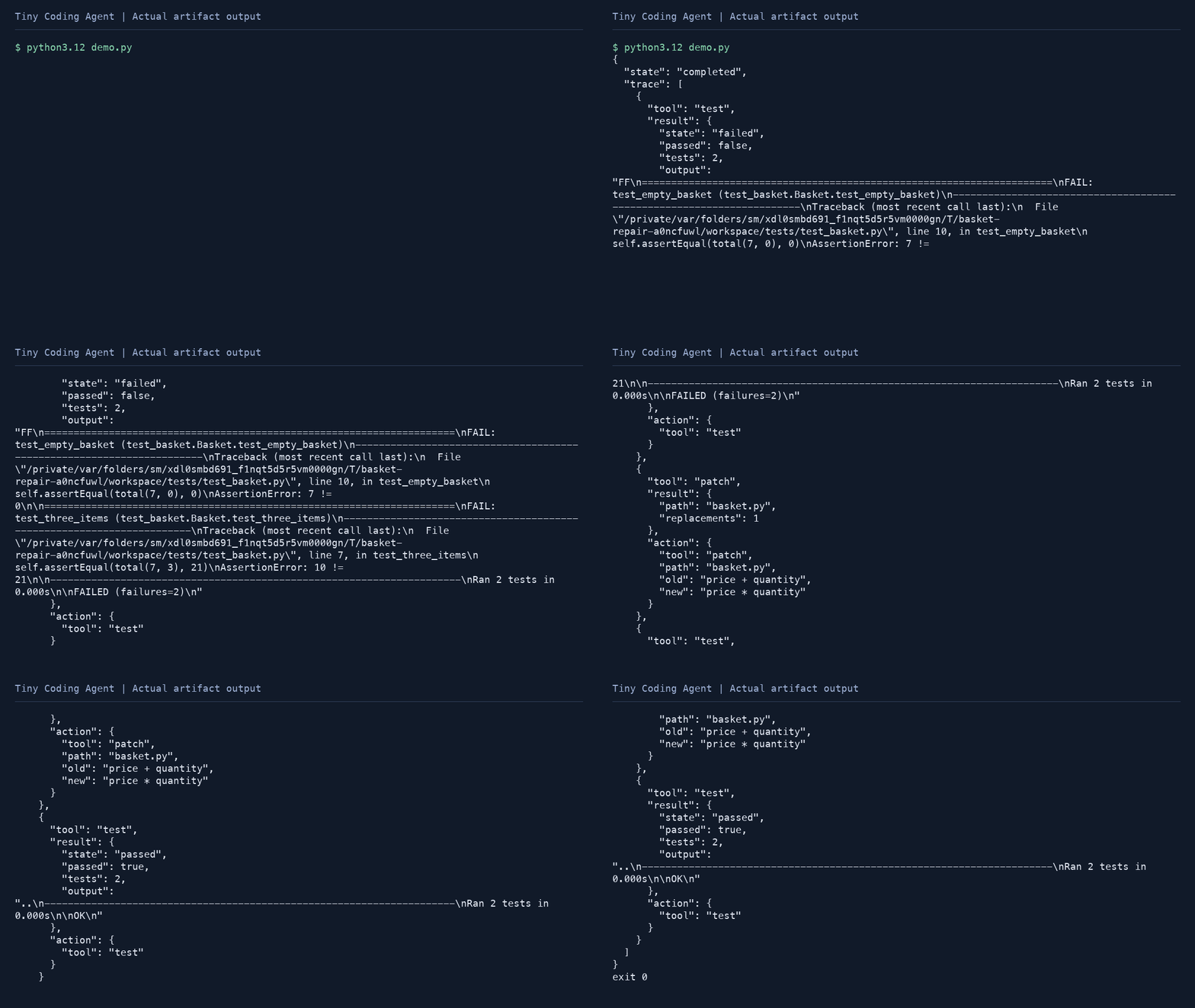
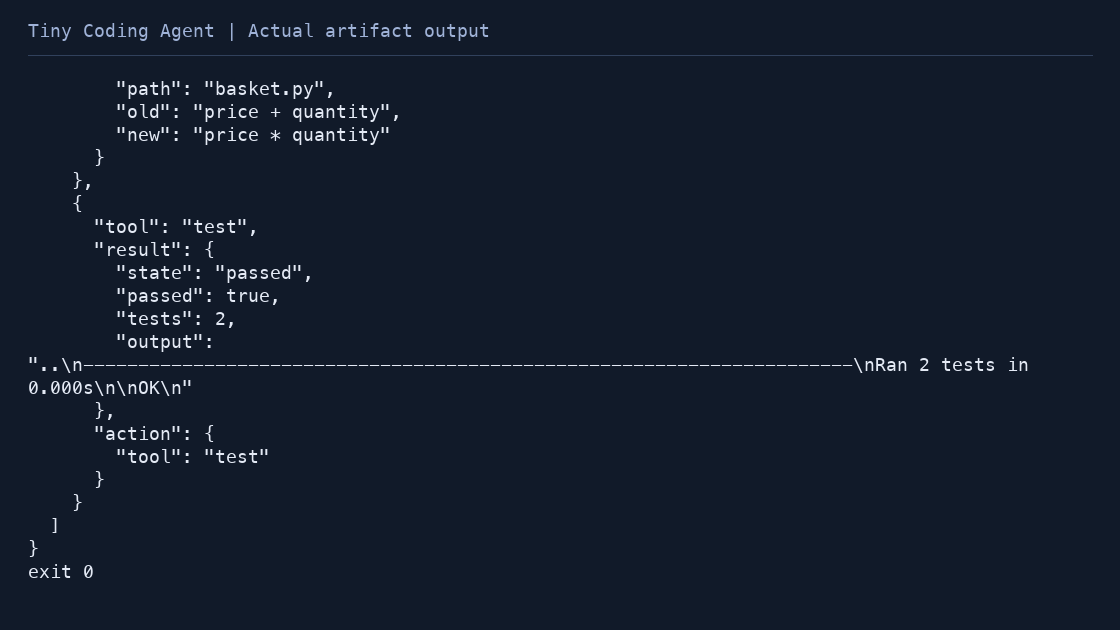
A repair agent that exposes the patch/test evidence trail and refuses unsupported success claims.
The Orchard basket repair runs in a disposable copy of a trusted Python workspace. Resolve every requested file under that root before opening it. A path may look local while a symlink redirects it outside the workspace.
Start with a learner workspace
The agent loop, Data management. Language foundation: Python data structures.
Use Python 3.10+ and its standard library. POSIX is required where the project uses file locks or process-group supervision.
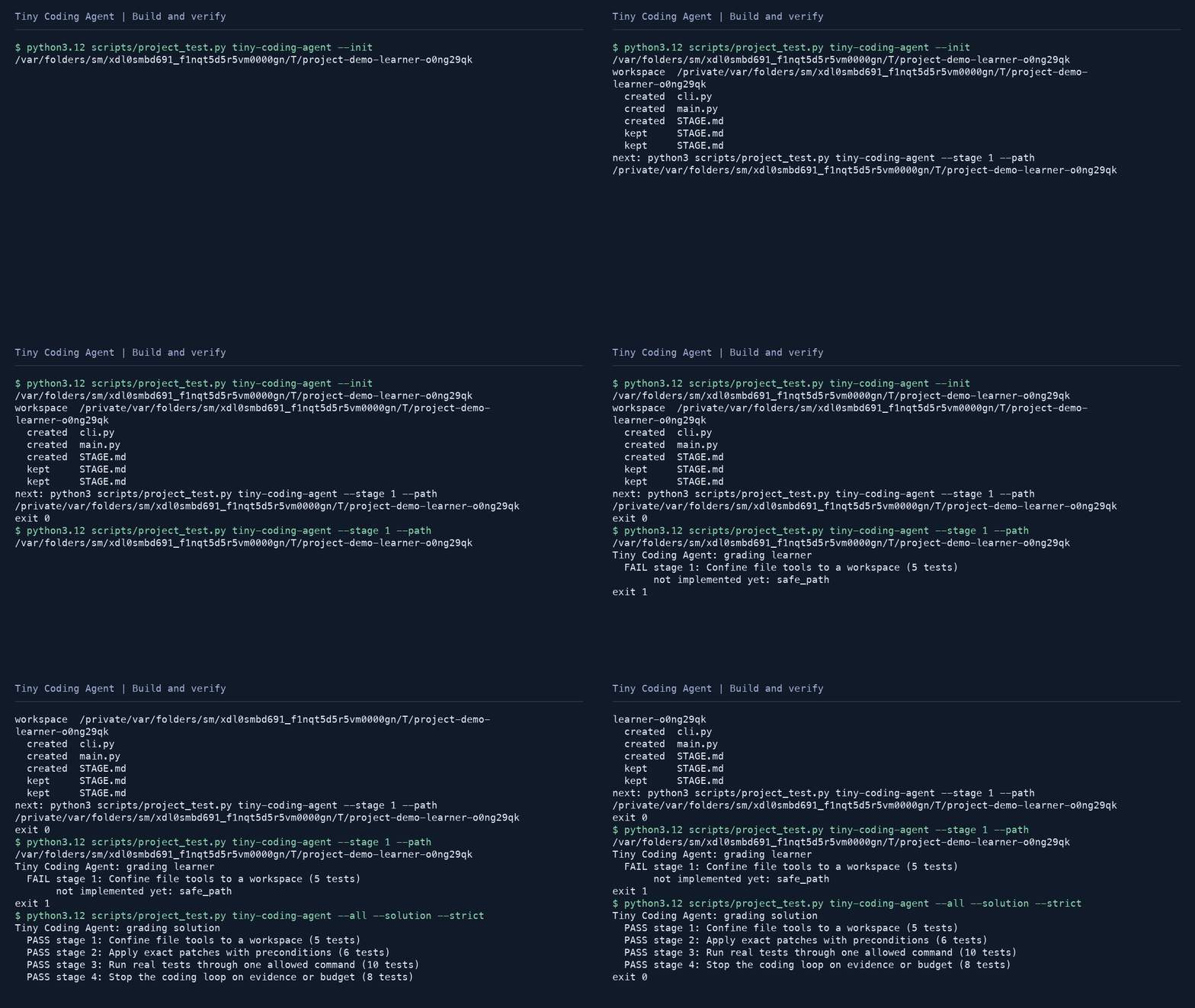
python3 scripts/project_test.py tiny-coding-agent --init learning-artifacts/tiny-coding-agent
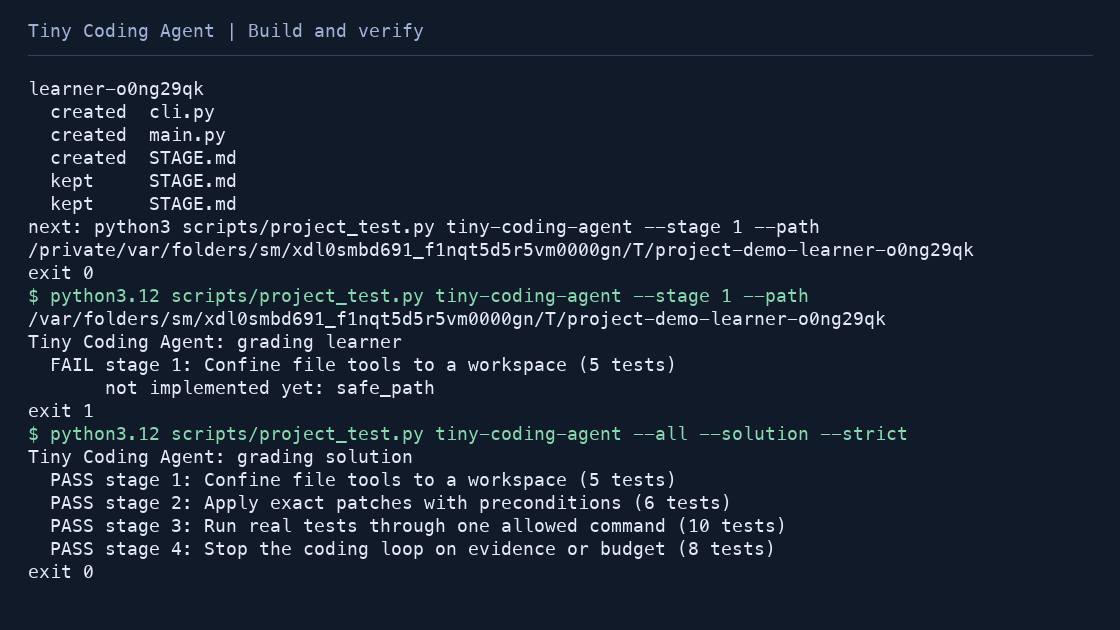
python3 scripts/project_test.py tiny-coding-agent --stage 1 --path learning-artifacts/tiny-coding-agent
Build route
- Confine file tools to a workspace
- Apply exact patches with preconditions
- Run real tests through one allowed command
- Stop the coding loop on evidence or budget
Run with your own inputs
After completing the stages, these commands run your workspace code on the original Orchard examples. Replace the sample paths with your own files.
python3 learning-artifacts/tiny-coding-agent/cli.py projects/tiny-coding-agent/examples/workspace projects/tiny-coding-agent/examples/proposals.json --copy-to basket-repair --out repair-trace.jsonTo inspect the complete reference first, replace learning-artifacts/tiny-coding-agent with projects/tiny-coding-agent/solution in the same command. JSON results use schema_version: 1; paths and argument examples are explicit so another tool can consume them.
Integration boundary
The CLI copies a trusted Python workspace to a new destination, then runs its tests as local code. The supplied proposal planner selects prewritten repairs from observed failures; it does not invent patches. POSIX process-group timeout stops descendants, but memory and output quotas require an OS-level runner.
python3 scripts/project_test.py tiny-coding-agent --all --solution --strict
python3 scripts/project_test.py tiny-coding-agent --all --path learning-artifacts/tiny-coding-agent --strict
The first command checks the reference. The second checks your implementation. The published examples and tests are regression evidence, not a production certification or an unseen benchmark.